Established
Last Updated
Location
Type
Phone
Affiliation
Program: MTTM
The candidate applying for admission to the MTTM program must have:
Successfully completed Bachelor degree with a minimum score of second division or GPA 2.0 out of 4 Grading Scale from any recognized university by Tribhuvan University.
Studied English as a full paper at Bachelor level or equivalent.
Applicants are required to appear in the entrance test conducted by the Faculty of Management (FOM).
The test will follow international testing patterns and standards. It includes areas like:
Verbal Ability
General Awareness
Quantitative Ability
Business and Economics
The final selection for admission will be based on:
Applicant’s previous academic records
Marks obtained in the admission test
Interview score
Candidates selected for admission will have to produce original certificates/testimonials for all examinations passed at the time of admission.
Program: MBM
A Bachelor’s Degree with:
Minimum CGPA of 2.0 (semester system), or
Minimum 45% marks (annual system)
CMAT written test administered by the Office of the Dean will serve as the basis for student intake.
The admission process involves three stages, conducted after the CMAT written test by the Department/Campus and follows the GMAT format:
Group Discussion
Applicants discuss a given topic.
Evaluation is based on leadership, language proficiency, logical arguments, and conclusions.
Individual Presentation
Applicants present their views and opinions on a topic to a panel.
Personal Interview
Conducted to assess an applicant’s motivation, attitude, aptitude, and ability to handle the rigor of the MBM program.
Program: MBS
The students applying for admission to MBS course must have successfully completed the BBS programme or a bachelor degree on any discipline from Tribhuvan University or from any other University recognized by Tribhuvan University.
Program: BBM
Written Test:The admission exam known as the Central Management Admission Test (CMAT), which is administered by the Faculty of Management, must be taken by eligible applicants. The test will be conducted according to international testing norms and guidelines. It covers things like Verbal ability, Quantitative ability, Logical reasoning, and General awareness.
The CMAT will consist of one hundred (100) objective questions, twenty-five (25) of which will be in each part and carry a total score of one hundred (100). For the CMAT, the student needs to receive at least a 40% score in order to be eligible for the interview.
Interview
Short-listed candidates will have scores in the CMAT above the cutoff. Interviews and selection for admission will only be conducted with shortlisted candidates.
Program: BBS
The applicant for admission to the BBS program:
Program: BBA
The candidate submitting an application for admission to the BBA program should have:
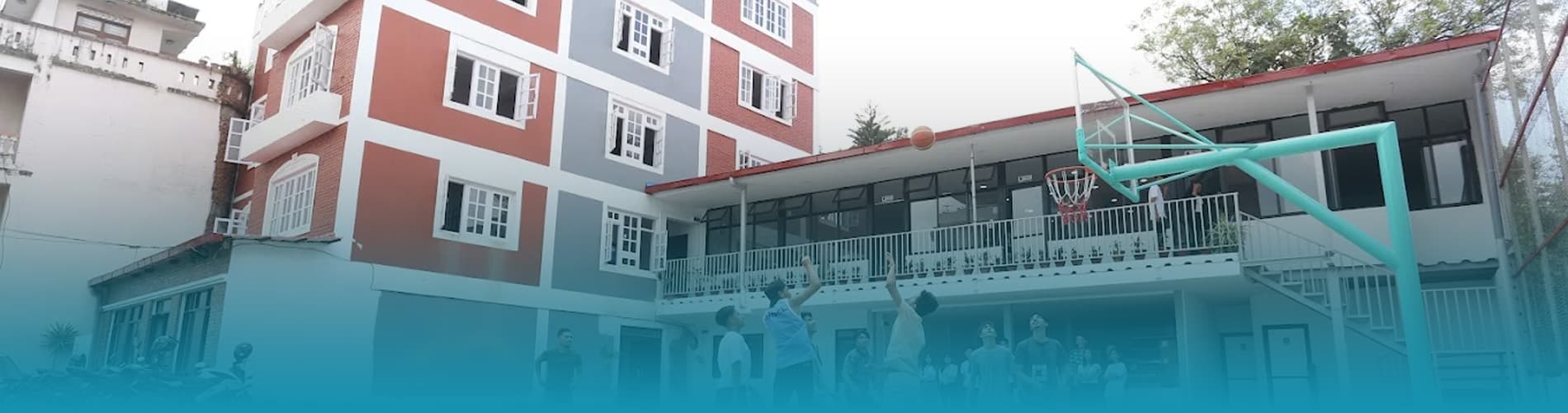
The Public Youth Campus (PYC) is a key component campus of Tribhuvan University’s (TU) Faculty of Management. The campus has an unrivaled place in the history of management education in Nepal, having been established in 1971 (2028 BS) with the establishment of the New Education System Plan.
PYC has a magnificent learning legacy in which instructors and students have demonstrated remarkable mutual cooperation, understanding, trust, and devotion, almost evocative of ancient seats of learning. Academics frequently describe it as a TU-constituent campus where political or disruptive actions would have little impact on or damage its instructional atmosphere.
Public Youth Campus has a long history of providing the country’s most basic business management services, such as the development of manpower to meet accounts, insurance, audit, commercial correspondence, franchise, trade operations, agency businesses, typing with short handwriting, and so on.
These were the themes that were sorely needed to deal with a new vista, a horizon generated in the business hemisphere of a newly declared democratic society that was progressing particularly in terms of foreign relations. The rapid beginning of democracy in 1950 left a large hole in both the big (high) and mid, lower workforce, both of which were required for business houses to provide a boost to expanding commerce at home and abroad.
The modest Commerce Department of Tri-Chandra College, established in 1954 AD (2011BS), did not fulfill the needs of the day, thus the faculty members of Tri-Chandra College (TC) took a step ahead in 1958 AD (2015BS) to build Public Commerce College. Messers Trailokya Man Singh Pradhan, Upendra Bahadur Pradhanang, Gehendra Bahadur Rajbhandari, Khem Ranjan Baral, and Mr. Gopal Man Shrestha were among those who advocated for the cause.
Public Youth Campus is affiliated with Tribhuvan University (TU).
Public Youth Campus is located in Dhobichaur, Kathmandu.
Public Youth Campus offers Master of Travel and Tourism Management, Master of Business Management, Master of Business Studies, Bachelor of Business Management, Bachelor of Business Studies and Bachelor of Business Administration.
Public Youth Campus was established in 1971.