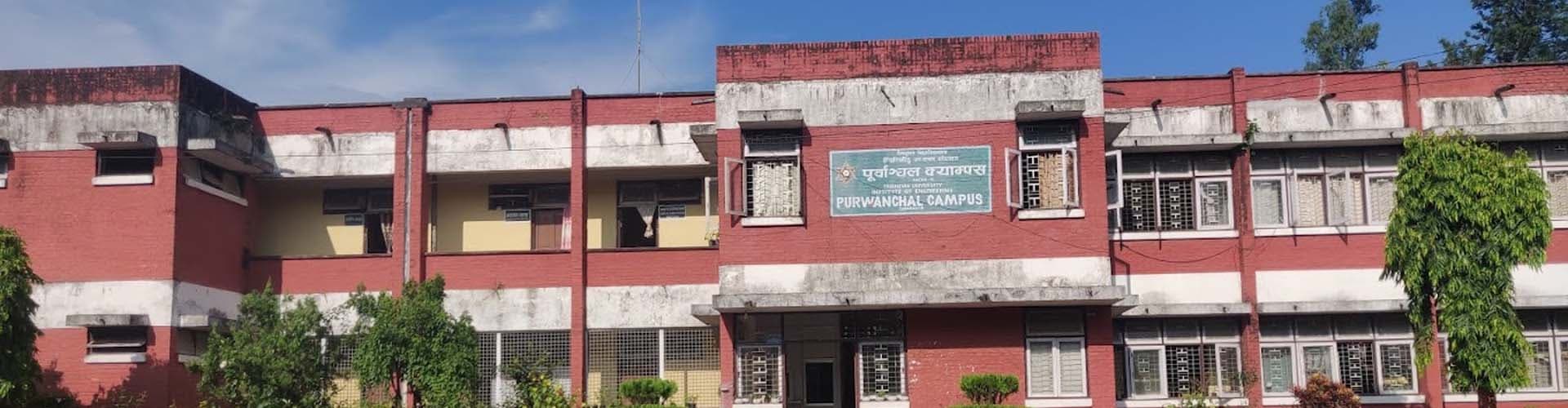
Master of Science (MSc) in Land and Water Engineering is a 2 year course by Tribhuvan University, Institute of Engineering.



Duration
Discipline
Level
Affiliation
Last Updated
To be eligible for admission, a candidate must:
Hold a Bachelor’s degree (4-year program) in Agricultural Engineering or Civil Engineering from a recognized university.
Achieve at least the minimum qualifying score as set by the Faculty Board in the Entrance Examination conducted by the Institute of Engineering (IOE).
1st Year, First Semester
Course Title |
|---|
System Analysis for Land and Water Resources |
Advanced Hydrology |
Geo–Hydro Informatics for Land and Water Resources |
Elective |
Course Title |
|---|
Planning, Design, and Management of Land and Water Resources |
Land and Water Engineering Lab |
On Farm Irrigation and Drainage |
Elective |
Course Title |
|---|
Research Methodology |
Elective |
Project Works |
Course Title |
|---|
Thesis Work |
River Engineering
Computational Hydraulics
Integrated Watershed Management
Land Development Machinery
Climate Change
EIA (Environmental Impact Assessment)
Land, Water, Environment and Food Nexus
Computer Programming
Non-Point Source Pollution and Management
Disaster Management
Design of Dams
Sectoral Water Demand and Distribution
Economics of Land and Water Resources
Socio-Political Dimensions of Land and Water Management
Science of Happiness and Well-Being
Understand principles of land and water resource management
Design irrigation, drainage, and watershed systems
Apply soil and water conservation techniques
Use GIS and remote sensing in land and water planning
Analyze hydrology and hydraulics for engineering solutions
Develop sustainable water supply and distribution systems
Address climate change impacts on land and water use
Conduct research in land use planning and water engineering
Promote eco-friendly and efficient agricultural practices
Prepare for careers in environmental engineering, agriculture, and resource management
The Master of Science (MSc) in Land and Water Engineering is a postgraduate program offered by the Department of Agricultural Engineering at the Purwanchal Campus. This course focuses on the application of engineering principles to enhance the management and sustainability of land and water resources.
It adopts a multidisciplinary approach, drawing knowledge from Civil Engineering, Environmental Engineering, and Agricultural Engineering to address challenges in areas like land use, water resource management, irrigation systems, drainage, water supply, hydrology, flood control, and sustainable land and water management.
Objectives
To develop advanced engineering skills for the planning, design, and management of land and water resource systems.
To strengthen the ability to design efficient systems for water resource projects.
To enhance proficiency in the use of modeling and simulation tools for hydrological and land resource analysis.
To provide an understanding of laws, policies, and practices related to the water, land, and environmental sectors.