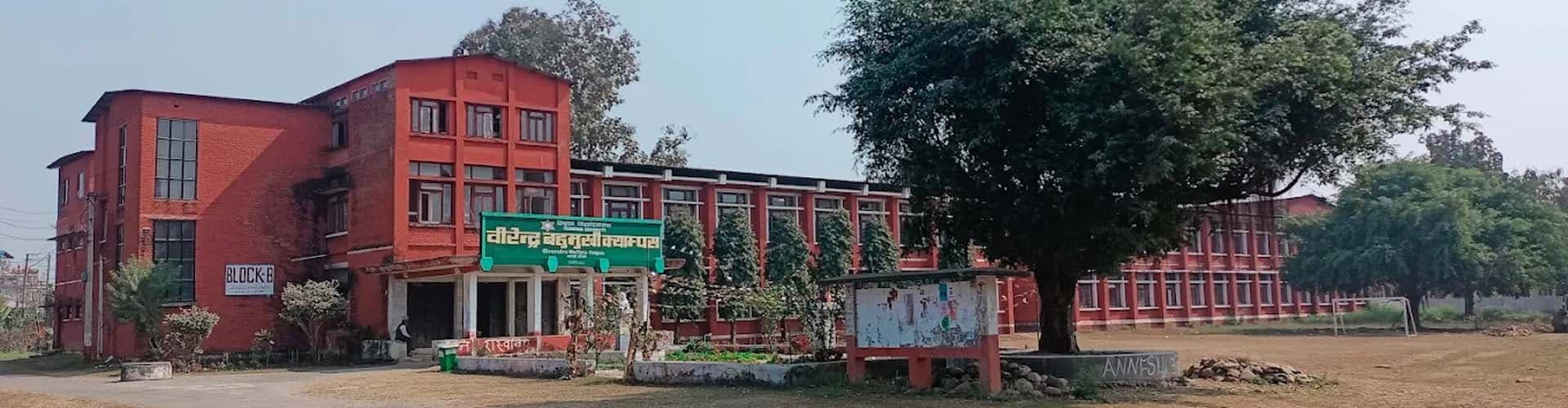
Master of Arts in English (MA English) is a 2 Years course by Tribhuvan University, Faculty of Humanities and Social Sciences.



Duration
Discipline
Level
Affiliation
Average Fee
Last Updated
Individuals who have earned a bachelor's degree in any field from Tribhuvan University or any accredited university with a minimum of 100 marks or equivalent are eligible for postgraduate study in English. Furthermore, graduates from any university in a nation where English is the mother tongue and who have received equal graduation level accreditation from a postsecondary institution are eligible to pursue postgraduate courses in English.
Entrance Examination as required by the Dean‘s Office, Faculty of Humanities and Social Sciences.Admissions will be based strictly on merit
(Required Courses)
ENGL 551 Introduction to Literature and Literary Analysis
ENGL 552 Academic Writing (I)
ENGL 553 Literary Criticism
ENGL 554 Ideas and Themes in Poetry
ENGL 555 Themes and Trends in Fiction
(Required Courses)
ENGL 556 History of British and American Literature
ENGL 557 Critical Stylistics
ENGL 558 Modern and Contemporary Literary Theory
(Any two courses)
ENGL 559 Postcolonial Studies
ENGL 560 Travel Writing
ENGL 561 Non-fiction (from the Margin)
ENGL 562 Literature of War, Conflict and Trauma
ENGL 563 Media Studies
ENGL 564 Environmental Literature and Criticism
ENGL 565 Children’s Literature
(Required Courses)
ENGL 566 British and American Drama
ENGL 567 Ideas and Themes in Contemporary Poetry
ENGL 568 Academic Writing (II)
(Any two courses)
ENGL 569 Nepali Writings in English
ENGL 570 South Asian Studies
ENGL 571 19th Century Studies
ENGL 572 Modernist Studies
ENGL 573 Gender and Masculinity Studies
ENGL 574 Life Writing and Autobiography
ENGL 575 Literature and History
ENGL 576 Translation Studies
(Required Courses)
ENGL 577 Experimental Fiction
ENGL 578 Cultural Studies
ENGL 579 Language and Communication
(Any two courses)
ENGL 580 Postmodernist Studies
ENGL 581 Performance and Theatre Studies
ENGL 582 Single Author
ENGL 583 Economics and Literature
ENGL 584 Interpersonal Communications
ENGL 585 English Language Teaching (ELT)
ENGL 586 Thesis Writing
History of Literature ( Any One) | |||
I | Eng 501-1 | Survey of English and American Literature | 100 Marks |
Eng 501-2 | Movement / Genre Studies | ||
Eng 501-3 | Period Studies | ||
Critical Foundation ( Any One) | |||
II | Eng 502-1 | Critical Theories from Plato to the Post-modern | 100 Marks |
Eng 502-2 | Critical Approaches to the study of Literature | ||
Eng 502-3 | Theories of Literature | ||
Eng 502-4 | Post-modern and Post colonial Studies | ||
Linguistics ( Any One) | |||
III | Eng 503-1 | Stylistics | 100 Marks |
Eng 503-2 | Pragmatics | ||
Eng 503-3 | Semiotics | ||
Writing ( Including Research Methodology (Any One) | |||
IV | Eng 504-1 | Creative Writing | 100 Marks |
Eng 504-2 | Rhetoric / Composition | ||
Eng 504-3 | Composition Studies | ||
Fiction (Any One) | |||
V | Eng 505-1 | A General Survey of British and American Fiction | 100 Marks |
Eng 505-2 | Fictional Genres & Themes | ||
Eng 505-3 | Short Fiction | ||
Eng 505-4 | Special Authors | ||
2nd Year
Poetry ( Any One) | |||
VI | Eng 506-1 | British and American Poetry: A Survey | 100 Marks |
Eng 506-2 | Poetry's Public | ||
Eng 506-3 | Special Author(S) | ||
Eng 506-4 | Special Topics | ||
Drama ( Any One) | |||
VII | Eng 507-1 | British and American Drama: Canons and Contexts | 100 Marks |
Eng 507-2 | Theatre Studies | ||
Eng 507-3 | Global Perspectives on Drama | ||
Eng 507-4 | Special Authors(S) | ||
Area Studies ( Any One) | |||
VIII | Eng 508-1 | South Asian Studies | 100 Marks |
Eng 508-2 | Non-Western Studies | ||
Eng 508-3 | Comparative Studies | ||
Special Topics (Any One) | |||
IX | Eng 509-1 | Intellectual History | 100 Marks |
Eng 509-2 | Modernism | ||
Eng 509-3 | Colonialism and Postcolonialism | ||
Additional Topics (Any One) | |||
X | Eng 510-1 | Tragedy | 100 Marks |
Eng 510-2 | Teaching of Language and Literature | ||
Eng 510-3 | American Literature | ||
Eng 510-4 | Children's Literature | ||
Eng 510-5 | Environmental Literature | ||
Eng 510-6 | Gender Literature | ||
Eng 510-7 | Literature In Translation | ||
Eng 510-8 | Interdisciplinary American Studies | ||
Eng 510-9 | Media studies | ||
Eng 510-10 | Inter-Art Studies | ||
Eng 510-11 | Nepalese Studies | ||
Eng 510-12 | Cultural Studies | ||
Eng 510-13 | Thesis | ||
English Lecturer or Teacher
Content Writer or Editor
Journalist or Media Professional
Translator or Interpreter
Copywriter
Creative Writer or Author
Researcher or Literary Critic
Public Relations Officer
Civil Services Aspirant
Further Studies (MPhil/PhD in English or Literature)
The M.A. English courses offer students insight into literature, language, culture, and history. Besides studying required core courses that reflect the nature of the discipline, students will have the flexibility of selecting courses from different areas such as language, literature, rhetoric and humanities. While retaining the fundamental philosophy of humanities education—cultivation of humanistic values and critical thinking—this syllabus aims at developing students’ creative, critical, and communicative skills that they need in their academic and professional life. Focus on writing, intensive study of literary genres, emphasis on interpretive and cultural theories, and the incorporation of interdisciplinary and comparative study are some of the underlying features of the courses. The syllabus requires a participatory and inquiry-based pedagogy for effective teaching and learning.
The courses seek to:
develop linkage between the B.A. English syllabus and the M. Phil. syllabus,
apply traditional and modern literary theories while reading and teaching literary texts,
train students to use English for effective communication,
help students produce creative and critical writing,
sharpen students creative and critical thinking,
cater to students’ need of gaining knowledge of literature and ideas,
provide flexibility to the teachers in developing courses of their interests,
develop courses that emphasize close reading and relationship among form, content and context,
ensure application of critical theories in the interpretation of texts, and
adopt interdisciplinary methods and approaches, and
enable students to comprehend and respond to issues and problems.