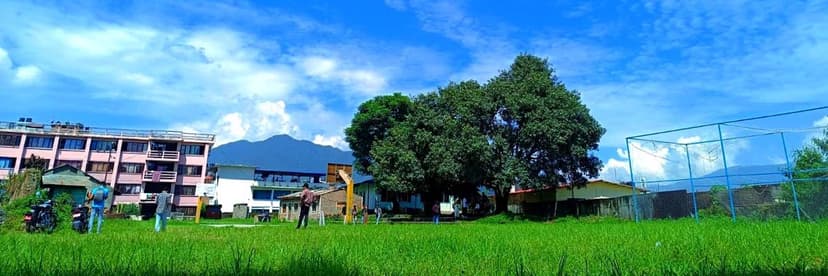
Bachelor of Science in Botany (BSc Botany) is a 4-year, yearly exam system program by Tribhuvan University, Institute of Science and Technology.



Duration
Discipline
Level
Affiliation
Last Updated
Any candidates who have completed 10+ 2 or equivalent securing minimum 'C' grade in all subjects of Grade 11 and 12 are eligible for admission in Bachelor of Science (B.Sc) in Biology program of Tribhuvan University.
Year | Course Code | Course Title | Units / Content |
|---|---|---|---|
First | Bot. 101 | General Botany | 1. Introduction 2. Kingdom: Monera 3A. Kingdom: Fungi 3B. Lichens 4. Algae 4B. Bryophyta 4C. Pteridophyta 4D. Gymnosperms 4E. Palaeobotany 5. Ecology |
Second | Bot. 201 | Botany-II | I. Angiosperms II. Plant Physiology III. Cytology and Genetics IV. Embryology V. Plant Anatomy |
Third | Bot. 301 | Plant Biochemistry and Plant Biotechnology | Unit A – Plant Biochemistry • Introduction • Biomolecules • Enzymes • Plant pigments • Vitamins and their roles • Bioinformatics Unit B – Plant Biotechnology • Overview • Tissue culture • Plant-Microbe interaction • Gene transfer in plants |
Third | Bot. 304 | Medicinal and Aromatic Plants (MAPs) | 1. Importance of MAPs 2. Diversity, distribution, trade 3. Conservation & sustainable use 4. Pharmacognosy 5. Cultivation tech. 6. Harvesting tech. 7. Field visit & report |
Third | Bot. 303 | Evolution and Biogeography (Elective) | 1. Basic concepts 2. Variation and evolution 3. More concepts 4. Historical biogeography 5. Ecological biogeography |
Fourth | - | Environment and Biodiversity | I. Environment • Introduction • Biosphere & Biomes • Ecosystem services • Environmental & Energy Issues • Resource mgmt. • EIA • Environmental affairs II. Biodiversity • Overview • Uses • Loss & conservation • Ethnobotany • Policy |
Fourth | Bot. 403 | Plant Pathology and Protection | • Plant Pathology • Plant Protection |
Fourth | Bot. 405 | Applied Botany | Floriculture • Introduction • Ornamental plants • Plant Propagation • Tools & techniques • Commercial flower production • Post-harvest Mushroom Cultivation • Introduction • Climatic factors • Techniques & post-harvest |
Fourth | Bot. 407 | Plants and Society | • Plant diversity & importance • Plants in Industry • Society and Plant Resources |
Understand plant structure and function
Learn plant classification and diversity
Gain practical skills in botany labs
Study plant ecology and environment
Explore plant genetics and evolution
Identify economically important plants
Conduct fieldwork and herbarium work
Analyze plant diseases and pathology
Promote biodiversity and conservation
Prepare for careers in botany-related fields
It is a comprehensive undergraduate degree that concentrates on the scientific study of plants, including their structure, growth, categorization, and environmental relationships. This program provides students with the theoretical knowledge and practical skills needed to comprehend the crucial role of plant life in maintaining ecosystems and contributing to biodiversity. The program is designed for aspiring botanists, researchers, and environmentalists, combining fundamental principles with sophisticated research approaches to create a comprehensive grasp of plant sciences.