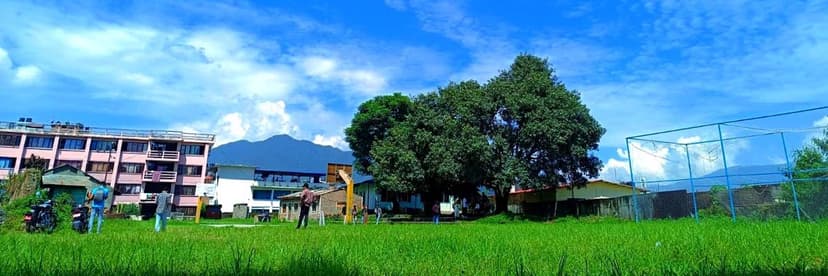
Master of Science (MSc) in Botany is a 2-year semester-based program by Tribhuvan University, Institute of Science and Technology.



Duration
Discipline
Level
Affiliation
Last Updated
Students with B.Sc. Botany or equivalent degrees from recognized universities can apply for admission, which is based on an entrance examination (100%).
Credit Hours: 17 | Full Marks (FM): 425 | Type: Theory + Practical
| S.N. | Course Title |
|---|---|
| 1. | Microbes and Fungi |
| 2. | Non-vascular Plants (Algae and Bryophytes) |
| 3. | Vascular Plants I (Pteridophytes and Gymnosperms) |
| 4. | Vascular Plants II (Angiosperms) |
| 5. | Field Work and Seminar (Specimen collection, preservation, and curation) |
Credit Hours: 19 | Full Marks (FM): 475 | Type: Theory + Practical
| S.N. | Course Title |
|---|---|
| 1. | Ecology |
| 2. | Cytology and Genetics |
| 3. | Plant Physiology |
| 4. | Plant Systematics |
| 5. | Field Work and Seminar (Ecological sampling, vegetation study, presentation) |
Credit Hours: 18 | Full Marks (FM): 450 | Type: Theory + Practical
| S.N. | Course Title |
|---|---|
| 1. | Research Methodology and Biological Data Analysis |
| 2. | Dissertation Proposal and Seminar |
| Option | Specialization Title | Courses |
|---|---|---|
| I | Ecology | Functional Plant Ecology, Landscape and Global Change Ecology |
| II | Plant Systematics | Applied Systematics, Biodiversity and Biogeography |
| III | Plant Biotechnology & Genetic Engineering | Plant Biotechnology, Genetic Engineering |
| IV | Applied Mycology & Plant Pathology | Applied Mycology, Advanced Plant Pathology |
| Option | Course Title |
|---|---|
| A | Natural Resources Management |
| B | Plant Conservation Biology |
| C | Molecular Biology in Plant Science |
| D | Food Security and Food Safety |
Credit Hours: 8 | Full Marks (FM): 200 | Type: Theory + Practical
| S.N. | Course Title |
|---|---|
| 1. | Case Study / Seminar |
| 2. | Dissertation |
Mandatory for Semester I & II
Involves visiting different botanical regions of the country
Aims to study vegetation and flora in natural habitats
Students must submit an excursion report during the annual practical examination
Study plant biology, physiology, and taxonomy
Understand ecology, biodiversity, and conservation
Conduct research in plant genetics and biotechnology
Analyze plant-environment interactions
Use lab and field techniques in botanical studies
Apply knowledge in agriculture, forestry, and pharma
Promote sustainable plant resource management
Prepare for careers in research, teaching, or environmental sectors
The M.Sc. in Botany program includes both coursework and research (dissertation). The first and second semesters are primarily devoted to theory-based courses, practical laboratory work, and foundational fieldwork. In addition to the particular coursework (both theory and lab and field practice), the third semester includes a component of research methodology, dissertation proposal drafting, and seminar presentation for the preliminary research preparation. Dissertation work takes up the whole fourth semester. Students will have the chance to add to current study areas during the fourth semester. The entire course is worth 1550 total points and 62 credit hours.